Giza Plateau, Egypt. 29°58'31"N 31°08'15"E
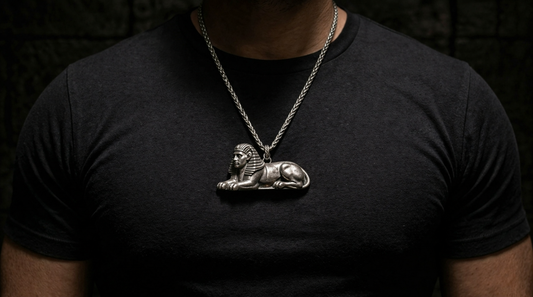
The Eroded Sphinx Pendant


€333,00
Scarred by Time. Untouched in Spirit.
The Eroded Sphinx represents endurance after damage. Not untouched strength, but tested strength. Not the authority of perfection, but the authority of survival. It is the image of something ancient that has been worn down, reinterpreted, and partially stripped away — yet remains more imposing than the story told about it.
As a pendant, it becomes a symbol of resilience, silent force, and skepticism toward polished narratives. A reminder that what survives destruction often carries more truth than what survives untouched. Scarred does not mean weakened. Eroded does not mean defeated.
As a pendant, it becomes a symbol of resilience, silent force, and skepticism toward polished narratives. A reminder that what survives destruction often carries more truth than what survives untouched. Scarred does not mean weakened. Eroded does not mean defeated.
Handcast in Mexico City · Ships worldwide
Specifications
Title
The Great Sphinx Pendant
Material
Sterling Silver .925
Finish
Rough Silver
Weight
20 g
Dimensions (HxWxD)
2x1x1 cm
Origin
Giza Plateau, Egypt. 29°58'31"N 31°08'15"E
✦
Any text, any piece. Precision-cut into solid metal — coordinates, initials, a date, a message. No matter how small, we'll get it there.
Enquire about engraving →
The record
Broken exterior. Intact power.
The Sphinx that stands on the Giza Plateau today is not a pristine monument. It is a wounded one. Its nose is gone. Its head a pea on a loaf of bread. Its surface is heavily worn. Its enclosure bears the marks of erosion, burial, excavation, repair, neglect, and argument. And in many ways, that version is more powerful than any imagined reconstruction. Because this is the Sphinx history failed to erase.
Egyptologists still repeat the standard date of around 2500 BCE, assigned to the reign of Khafre, as if the matter were settled. But the monument itself remains far less obedient than the narrative. There is no inscription identifying its builder or original purpose. The head appears too small for the body, suggesting recarving from an earlier and larger form. And the weathering patterns on the enclosure have long fueled the argument that the structure, or at least its core form, may be much older than the official timeline allows.
What survives today is not just a symbol of ancient Egypt. It is a symbol of damage, revision, and endurance. A recumbent stone beast with a mutilated face and a body still too large to ignore. It has been buried in sand for long stretches of history, uncovered, repaired, claimed, explained, and explained again. None of that has made it less strange.
The modern Sphinx is not impressive because it is complete. It is impressive because it is not. It has lost features, context, and certainty, yet still dominates the landscape and the imagination.
This piece is cast from an original sculptural interpretation of the monument in its weathered state and finished by hand in Mexico City.
The rough silver surface echoes worn limestone, shadowed recesses, and the authority of a form that remains intact where it matters. It is not a replica. It is a ruin made personal — and a reminder that some things become more convincing after history has tried to break them.
Egyptologists still repeat the standard date of around 2500 BCE, assigned to the reign of Khafre, as if the matter were settled. But the monument itself remains far less obedient than the narrative. There is no inscription identifying its builder or original purpose. The head appears too small for the body, suggesting recarving from an earlier and larger form. And the weathering patterns on the enclosure have long fueled the argument that the structure, or at least its core form, may be much older than the official timeline allows.
What survives today is not just a symbol of ancient Egypt. It is a symbol of damage, revision, and endurance. A recumbent stone beast with a mutilated face and a body still too large to ignore. It has been buried in sand for long stretches of history, uncovered, repaired, claimed, explained, and explained again. None of that has made it less strange.
The modern Sphinx is not impressive because it is complete. It is impressive because it is not. It has lost features, context, and certainty, yet still dominates the landscape and the imagination.
This piece is cast from an original sculptural interpretation of the monument in its weathered state and finished by hand in Mexico City.
The rough silver surface echoes worn limestone, shadowed recesses, and the authority of a form that remains intact where it matters. It is not a replica. It is a ruin made personal — and a reminder that some things become more convincing after history has tried to break them.
Craft
Cast and hand-finished in Mexico City. 3D modelled from archaeological reference, printed, moulded, cast in wax, perfected by hand, then cast in solid precious metal. No two pieces are identical.
-
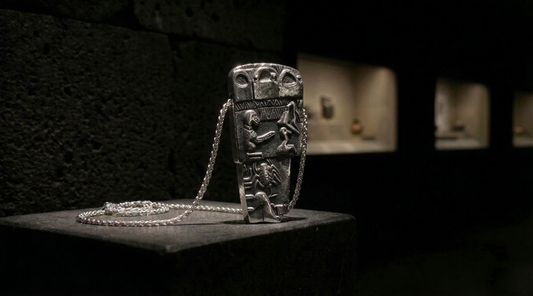
The Tlaloc Monolith Pendant
Regular price From €555,00 EURRegular priceUnit price per -
The Göbekli Tepe Pillar 43 Pendant
Regular price From €555,00 EURRegular priceUnit price per -
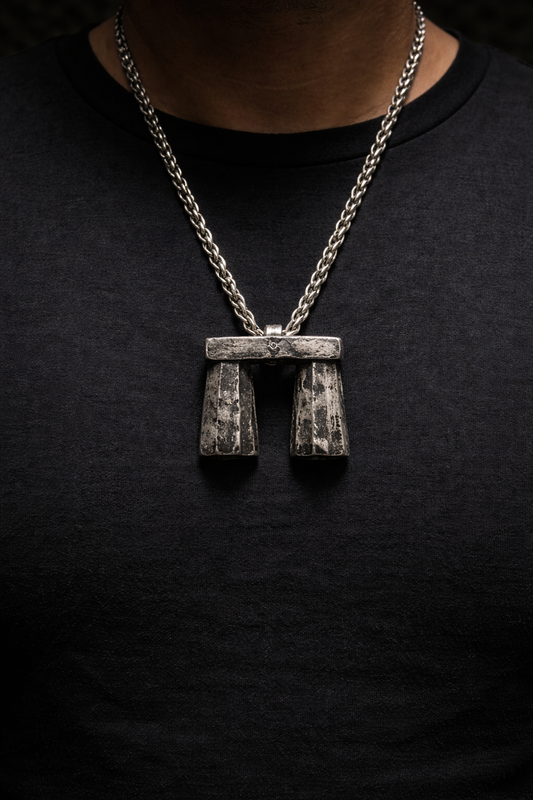
The Stonehenge Trilithon Pendant
Regular price From €555,00 EURRegular priceUnit price per -
The Eroded Sphinx Pendant
Regular price From €333,00 EURRegular priceUnit price per -
The Great Sphinx Pendant
Regular price From €333,00 EURRegular priceUnit price per -
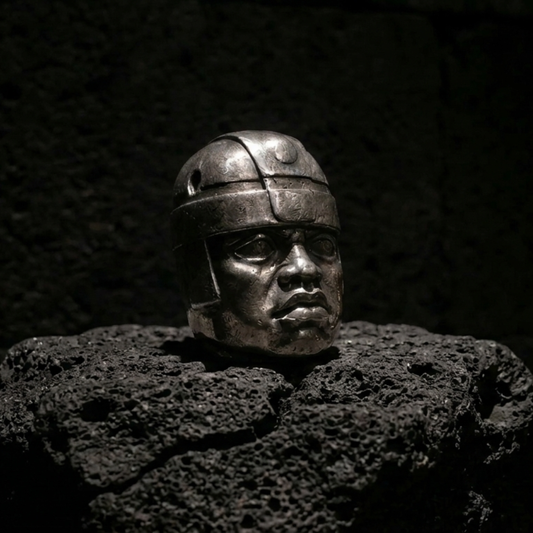
The Giant Olmec Head Pendant
Regular price From €777,00 EURRegular priceUnit price per -
The Pregnant Woman Pendant
Regular price €420,00 EURRegular priceUnit price per -
The Moai Head Pendant
Regular price From €333,00 EURRegular priceUnit price per

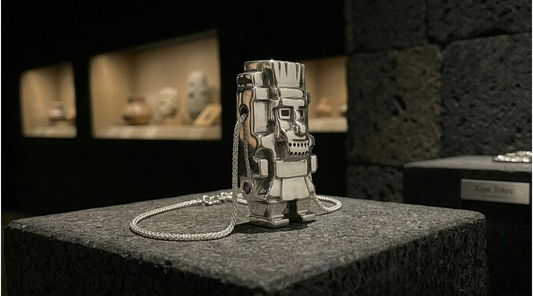






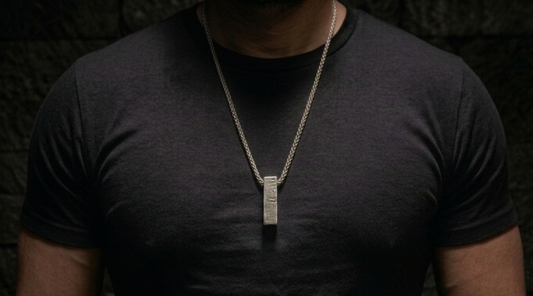

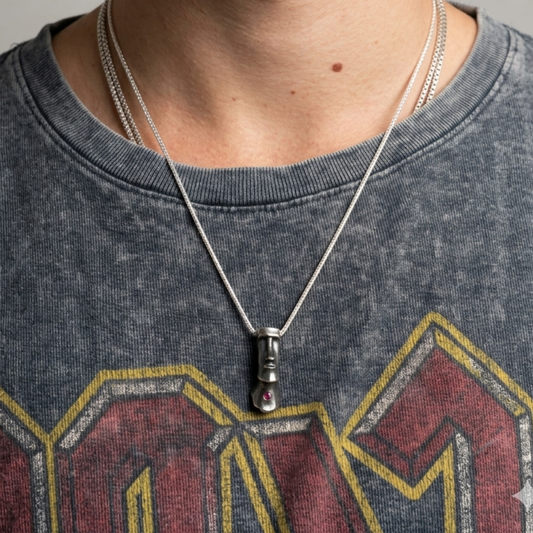
Silver Chains
-
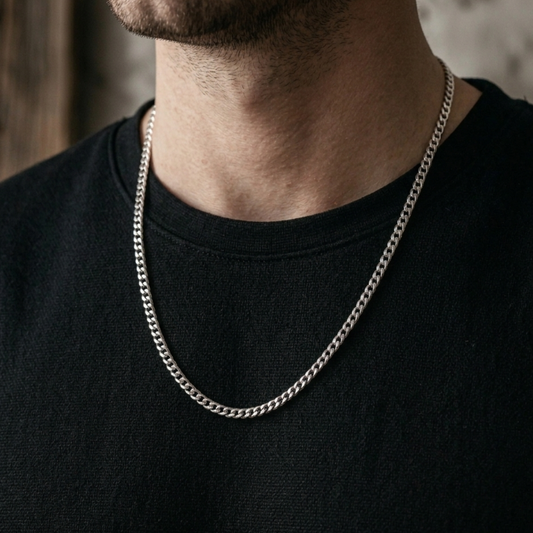
Cuban Chain Silver Necklace .925
Regular price From €99,00 EURRegular priceUnit price per€90,00 EURSale price From €99,00 EUR -
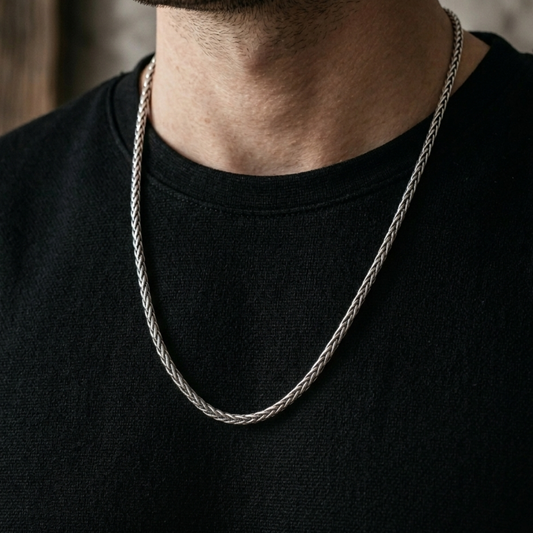
Spiga Chain Silver Necklace .925
Regular price From €169,00 EURRegular priceUnit price per€90,00 EURSale price From €169,00 EUR -
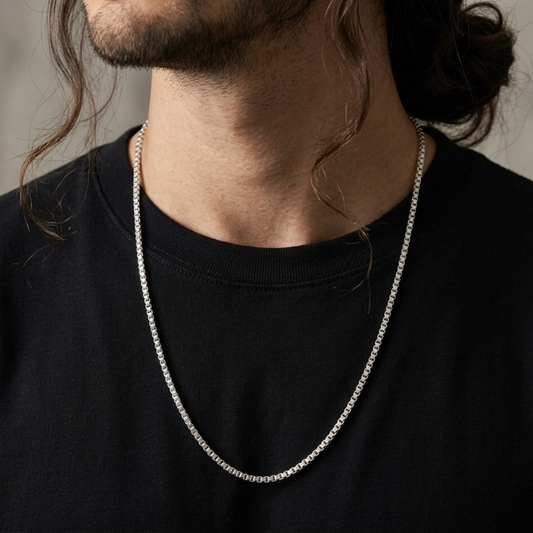
Box Chain Silver Necklace .925
Regular price From €119,00 EURRegular priceUnit price per€90,00 EURSale price From €119,00 EUR