Stonehenge, Wiltshire, England. 51.1789° N, 1.8262° W
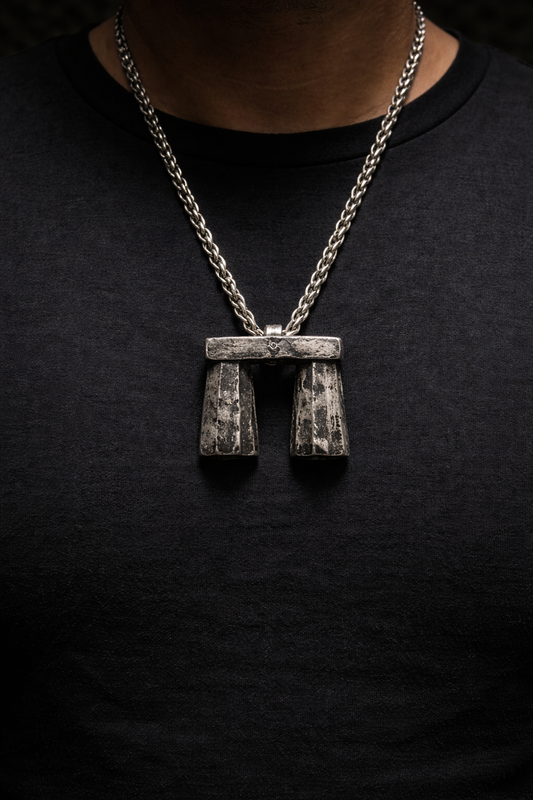
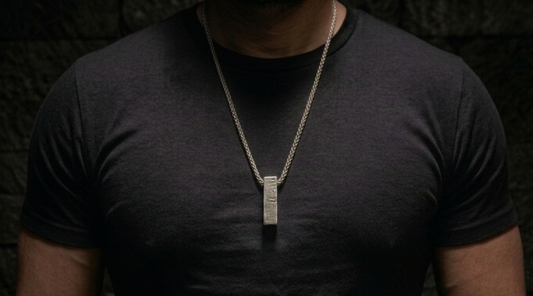
The Stonehenge Trilithon Pendant


€555,00
Raised With Purpose. Standing Beyond Explanation.
The Stonehenge Trilithon represents structure, support, and deliberate alignment. It is a symbol of order imposed on mass, of human will made visible through weight, geometry, and repetition. More than a ruin, it is a statement: something was known, intended, and enacted here at a scale too serious to dismiss.
As a pendant, it becomes a symbol of inner structure, supporting strength, and respect for forms that outlast explanation. It speaks less to ornament than to orientation — to standing upright, carrying weight, and remaining aligned when the purpose is larger than the immediate moment.
As a pendant, it becomes a symbol of inner structure, supporting strength, and respect for forms that outlast explanation. It speaks less to ornament than to orientation — to standing upright, carrying weight, and remaining aligned when the purpose is larger than the immediate moment.
Handcast in Mexico City · Ships worldwide
Specifications
Title
The Stonehenge Trilithon Pendant
Material
Sterling Silver .925
Finish
Rough Silver
Weight
35 g
Dimensions (HxWxD)
2x3x1 cm
Origin
Stonehenge, Wiltshire, England. 51.1789° N, 1.8262° W
✦
Any text, any piece. Precision-cut into solid metal — coordinates, initials, a date, a message. No matter how small, we'll get it there.
Enquire about engraving →
The record
An ancient calendar or a place of worship.
On an open plain in southern England stands a monument so famous it risks being underestimated. Stonehenge is treated as familiar, almost domestic, because everyone has seen it. But strip away the tourism, the schoolbook summaries, and the polished heritage language, and what remains is deeply strange: enormous stones transported over long distances, raised upright, capped with lintels, aligned with celestial events, and arranged with a level of planning that still provokes argument.
The trilithons are the heart of it. Two upright stones supporting a third across the top: a structural idea so blunt, stable, and monumental that it feels less like decoration than declaration. This was not casual building. It was effort on a civilizational scale, directed toward a form whose purpose is still debated — ritual site, cosmological marker, ancestral ground, temple, calendar, initiation place, all of the above, or something partly lost to us.
The larger sarsen stones of Stonehenge were likely raised around 2500 BC, but the site’s history stretches earlier, and the reasons for its final form remain contested. Some of the bluestones came from Wales, transported astonishing distances by means that still invite disbelief when presented too neatly. As usual, the mainstream version often has just enough explanation to sound complete and not enough to feel satisfying.
What matters is the form itself. The trilithon is architecture reduced to command: two verticals, one horizontal, mass held in tension, permanence forced into shape. It is one of humanity’s earliest great statements in stone, and it still works because the geometry is undeniable.
This piece is cast from an original sculptural interpretation of the Stonehenge trilithon form and finished by hand in Mexico City.
The surface echoes weathered stone, shadowed edges, and the hard clarity of megalithic design. It is not a replica. It is a condensed monument — and a reminder that some of the most powerful things humans have ever made were also the simplest.
The trilithons are the heart of it. Two upright stones supporting a third across the top: a structural idea so blunt, stable, and monumental that it feels less like decoration than declaration. This was not casual building. It was effort on a civilizational scale, directed toward a form whose purpose is still debated — ritual site, cosmological marker, ancestral ground, temple, calendar, initiation place, all of the above, or something partly lost to us.
The larger sarsen stones of Stonehenge were likely raised around 2500 BC, but the site’s history stretches earlier, and the reasons for its final form remain contested. Some of the bluestones came from Wales, transported astonishing distances by means that still invite disbelief when presented too neatly. As usual, the mainstream version often has just enough explanation to sound complete and not enough to feel satisfying.
What matters is the form itself. The trilithon is architecture reduced to command: two verticals, one horizontal, mass held in tension, permanence forced into shape. It is one of humanity’s earliest great statements in stone, and it still works because the geometry is undeniable.
This piece is cast from an original sculptural interpretation of the Stonehenge trilithon form and finished by hand in Mexico City.
The surface echoes weathered stone, shadowed edges, and the hard clarity of megalithic design. It is not a replica. It is a condensed monument — and a reminder that some of the most powerful things humans have ever made were also the simplest.
Craft
Cast and hand-finished in Mexico City. 3D modelled from archaeological reference, printed, moulded, cast in wax, perfected by hand, then cast in solid precious metal. No two pieces are identical.
-
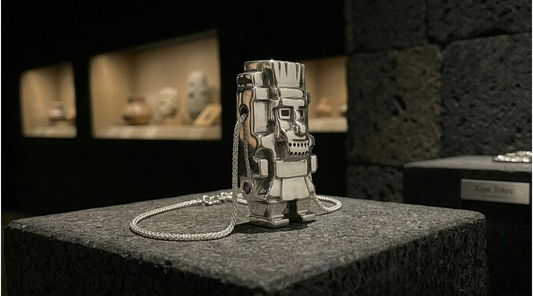
The Tlaloc Monolith Pendant
Regular price From €555,00 EURRegular priceUnit price per -
The Göbekli Tepe Pillar 43 Pendant
Regular price From €555,00 EURRegular priceUnit price per -
The Stonehenge Trilithon Pendant
Regular price From €555,00 EURRegular priceUnit price per -
The Eroded Sphinx Pendant
Regular price From €333,00 EURRegular priceUnit price per -
The Great Sphinx Pendant
Regular price From €333,00 EURRegular priceUnit price per -
The Giant Olmec Head Pendant
Regular price From €777,00 EURRegular priceUnit price per -
The Pregnant Woman Pendant
Regular price €420,00 EURRegular priceUnit price per -
The Moai Head Pendant
Regular price From €333,00 EURRegular priceUnit price per








Silver Chains
-
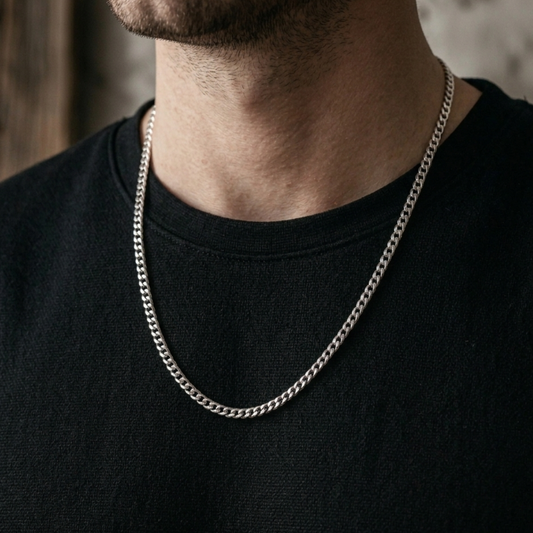
Cuban Chain Silver Necklace .925
Regular price From €99,00 EURRegular priceUnit price per€90,00 EURSale price From €99,00 EUR -
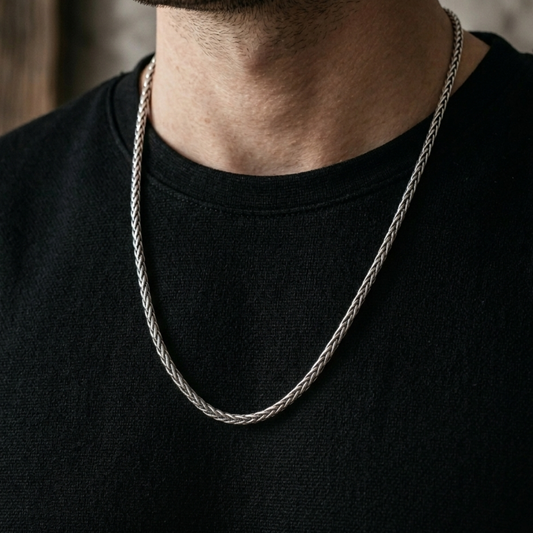
Spiga Chain Silver Necklace .925
Regular price From €169,00 EURRegular priceUnit price per€90,00 EURSale price From €169,00 EUR -
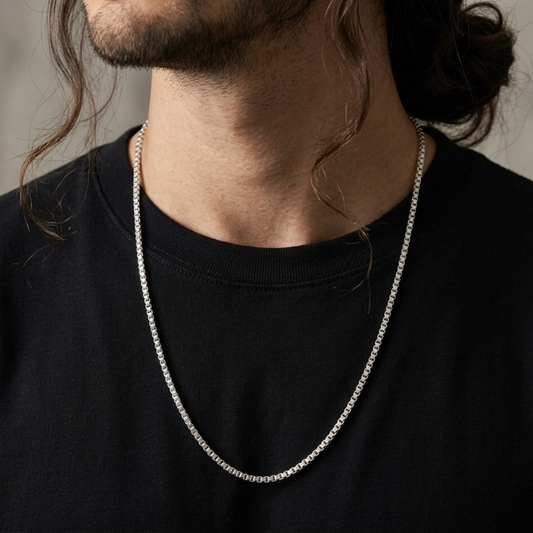
Box Chain Silver Necklace .925
Regular price From €119,00 EURRegular priceUnit price per€90,00 EURSale price From €119,00 EUR