Baalbek, Lebanon – 33°59'57.69"N 36°12'00.43"E
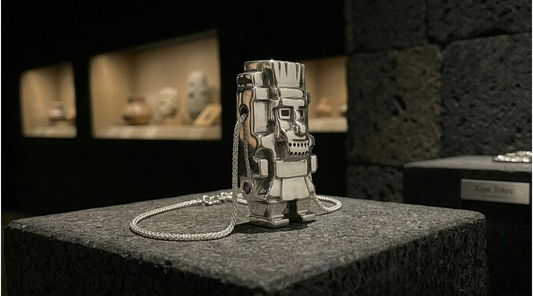
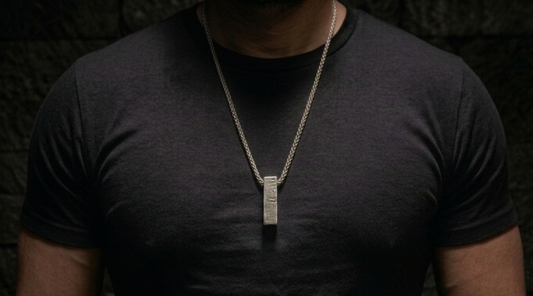
The Pregnant Woman Pendant


€420,00
The will to carry what others cannot.
The largest stone ever quarried by human hands was left where it fell. Cast aside (or perhaps simply abandoned) by a force or purpose we no longer understand. Its name is contested. Its destination unknown. Its reason for existence still argued over.
This piece is cast at 1:586 scale from that stone. It symbolizes the kind of strength that doesn't announce itself. Unwavering support. The will to carry great burdens without explanation. Wear it for whoever you carry.
This piece is cast at 1:586 scale from that stone. It symbolizes the kind of strength that doesn't announce itself. Unwavering support. The will to carry great burdens without explanation. Wear it for whoever you carry.
Handcast in Mexico City · Ships worldwide
Specifications
Title
The Pregnant Woman Pendant
Material
Sterling Silver .925
Finish
Brushed Silver
Weight
33 g
Dimensions (HxWxD)
3.4 x 1 x 1 cm
Origin
Baalbek, Lebanon – 33°59'57.69"N 36°12'00.43"E
✦
Any text, any piece. Precision-cut into solid metal — coordinates, initials, a date, a message. No matter how small, we'll get it there.
Enquire about engraving →
The record
1,650 tonnes. Still in the ground. Nobody knows why.
The Stone of the Pregnant Woman lies in a quarry outside Baalbek, Lebanon, where it has rested for at least two thousand years. It is the largest known cut stone in the world — 1,650 tonnes, approximately 20 metres long. It was cut with precision from the bedrock and then left. Never moved. Never used. No structure it was destined for has ever been identified.
The Romans built the Temple of Jupiter at Baalbek on top of stones of 800 tonnes, already the largest building blocks in the ancient world. The Pregnant Woman stone is twice that weight. How its builders intended to move it, or where, remains unanswered. The engineering required to lift it does not exist in any known Roman records.
The name itself is disputed. One explanation traces it to a local legend; another suggests the Arabic name refers to the stone's swollen, rounded underside. Nobody agrees on that either.
What remains is the stone itself. Cut, finished, and left exactly where it was made. Still there. Waiting for something that never came. Or stopped by something that did.
This piece is cast from an original sculptural interpretation of the stone's form, finished by hand in Mexico City. The brushed surface replicates the raw texture of the megalith — unpolished, undecorated, exactly as the original is still left to this day.
The Romans built the Temple of Jupiter at Baalbek on top of stones of 800 tonnes, already the largest building blocks in the ancient world. The Pregnant Woman stone is twice that weight. How its builders intended to move it, or where, remains unanswered. The engineering required to lift it does not exist in any known Roman records.
The name itself is disputed. One explanation traces it to a local legend; another suggests the Arabic name refers to the stone's swollen, rounded underside. Nobody agrees on that either.
What remains is the stone itself. Cut, finished, and left exactly where it was made. Still there. Waiting for something that never came. Or stopped by something that did.
This piece is cast from an original sculptural interpretation of the stone's form, finished by hand in Mexico City. The brushed surface replicates the raw texture of the megalith — unpolished, undecorated, exactly as the original is still left to this day.
Craft
Cast and hand-finished in Mexico City. 3D modelled from archaeological reference, printed, moulded, cast in wax, perfected by hand, then cast in solid precious metal. No two pieces are identical.
-
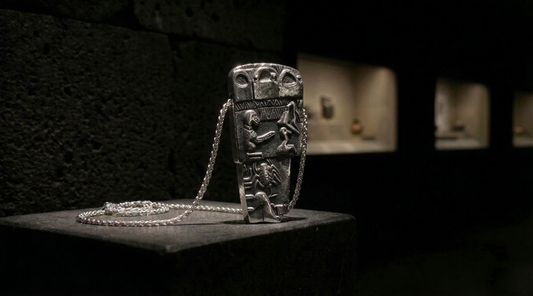
The Tlaloc Monolith Pendant
Regular price From €555,00 EURRegular priceUnit price per -
The Göbekli Tepe Pillar 43 Pendant
Regular price From €555,00 EURRegular priceUnit price per -
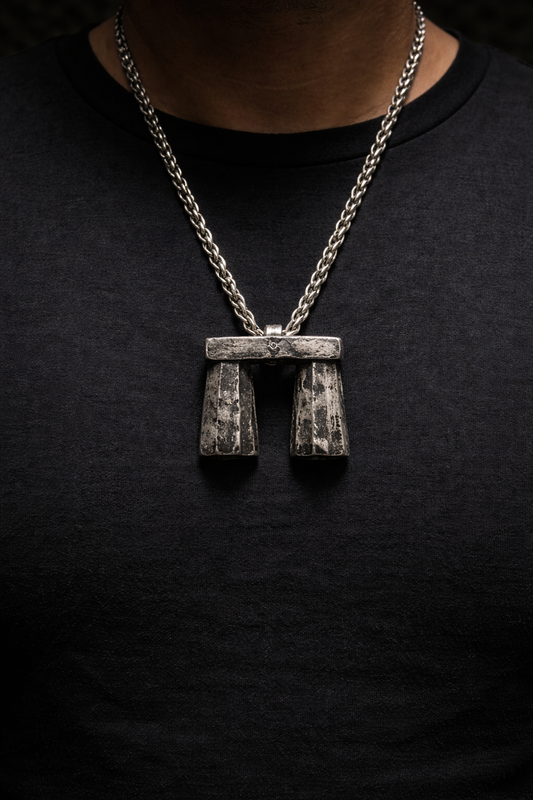
The Stonehenge Trilithon Pendant
Regular price From €555,00 EURRegular priceUnit price per -
The Eroded Sphinx Pendant
Regular price From €333,00 EURRegular priceUnit price per -
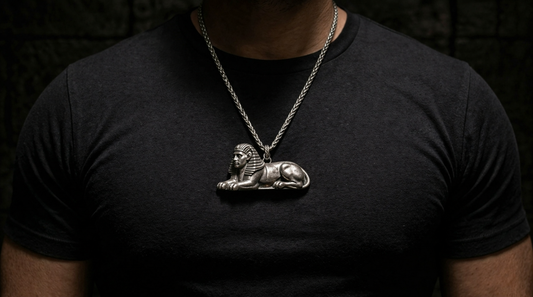
The Great Sphinx Pendant
Regular price From €333,00 EURRegular priceUnit price per -
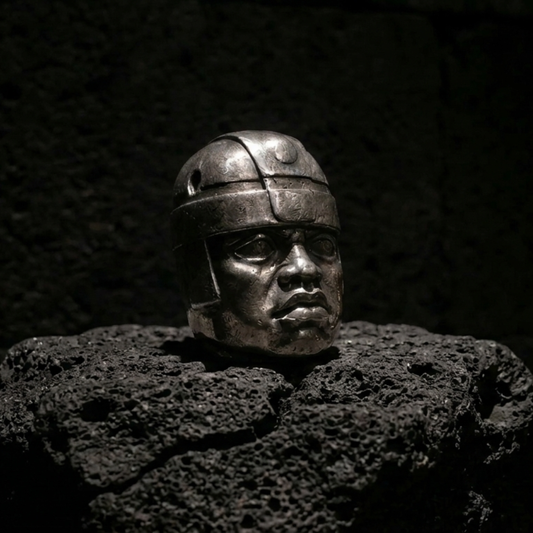
The Giant Olmec Head Pendant
Regular price From €777,00 EURRegular priceUnit price per -
The Pregnant Woman Pendant
Regular price €420,00 EURRegular priceUnit price per -
The Moai Head Pendant
Regular price From €333,00 EURRegular priceUnit price per








Silver Chains
-
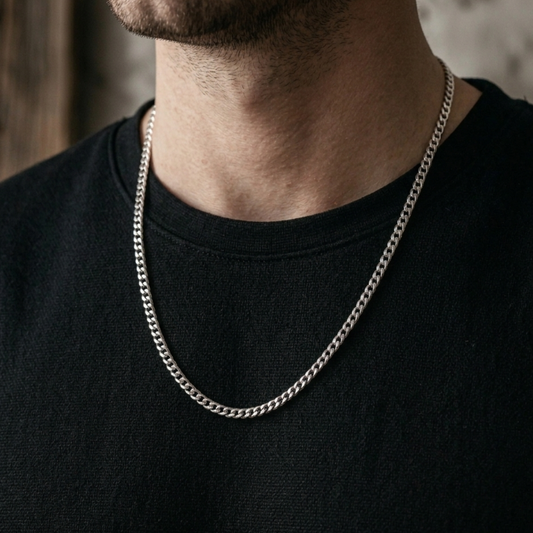
Cuban Chain Silver Necklace .925
Regular price From €99,00 EURRegular priceUnit price per€90,00 EURSale price From €99,00 EUR -
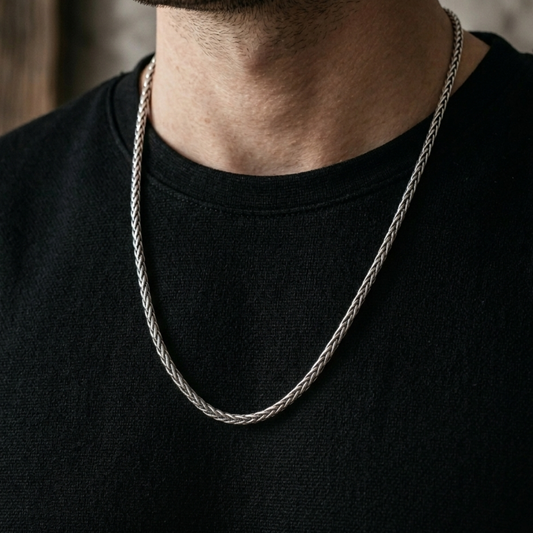
Spiga Chain Silver Necklace .925
Regular price From €169,00 EURRegular priceUnit price per€90,00 EURSale price From €169,00 EUR -
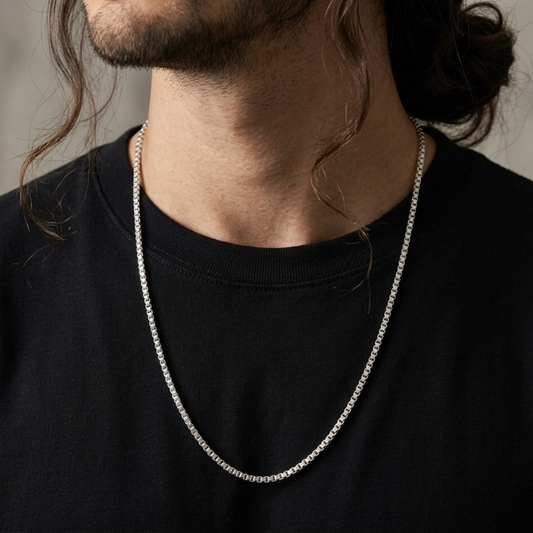
Box Chain Silver Necklace .925
Regular price From €119,00 EURRegular priceUnit price per€90,00 EURSale price From €119,00 EUR