Giza Plateau, Egypt. 29°58'31"N 31°08'15"E
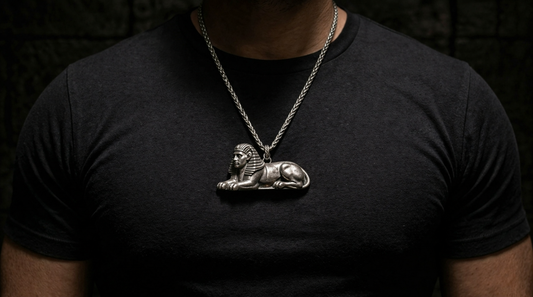
The Great Sphinx Pendant


€333,00
Poser of Cumbersome Questions. Enemy of Easy Answers.
The Great Sphinx represents more than wisdom, kingship, or guardianship. It represents endurance against interpretation itself. A monument so large, strange, and unresolved that generation after generation has tried to reduce it to something manageable.
As a pendant, it becomes a symbol of silent wisdom, disciplined force, and skepticism toward official certainty. Not rebellion for theater. Not contrarianism for its own sake. A harder instinct than that: to look at what is in front of you, notice what does not add up, and refuse to call the mystery solved just because someone in authority already did.
As a pendant, it becomes a symbol of silent wisdom, disciplined force, and skepticism toward official certainty. Not rebellion for theater. Not contrarianism for its own sake. A harder instinct than that: to look at what is in front of you, notice what does not add up, and refuse to call the mystery solved just because someone in authority already did.
Handcast in Mexico City · Ships worldwide
Specifications
Title
The Great Sphinx Pendant
Material
Sterling Silver .925
Finish
Smooth Silver
Weight
20 g
Dimensions (HxWxD)
2x1x1 cm
Origin
Giza Plateau, Egypt. 29°58'31"N 31°08'15"E
✦
Any text, any piece. Precision-cut into solid metal — coordinates, initials, a date, a message. No matter how small, we'll get it there.
Enquire about engraving →
The record
Too monumental for their timeline.
The Great Sphinx sits on the Giza Plateau facing the sunrise, massive, silent, and insultingly older-looking than the story most Egyptologists still try to pin on it. The standard line is familiar: around 2500 BCE, built under Pharaoh Khafre, problem solved. Clean dates. Clean attribution. Clean certainty. The monument itself is nowhere near that cooperative.
There is no inscription on the Sphinx identifying its builder, its original name, or its intended purpose. None. For a monument of this scale, that absence matters. The head is disproportionately small relative to the body, which has led many to argue it was recarved from an earlier, larger form. Most plausibly a lion’s head. Even visually, the ratios are wrong. The body suggests one thing. The head suggests revision.
Then there is the erosion. Researchers such as John Anthony West and geologist Robert Schoch argued that the weathering patterns on the Sphinx enclosure are more consistent with significant water erosion than with wind and sand alone. If that reading is correct, the monument, or at least its core form, may date back to a much wetter climatic period, thousands of years earlier than the dynastic Egyptian timeline usually assigned to it. Or perhaps to a time of great floods.
That does not sit comfortably inside the mainstream chronology, which is exactly why it gets waved away so aggressively.
The official explanation is not impossible. It is just far less complete than it pretends to be.
This piece is cast from an original sculptural interpretation of the Great Sphinx form and finished by hand in Mexico City. The smooth silver finish echoes the pristine quality of ancient limestone as if it was built just yesterday. It is not a replica. It is a condensed monument — and a reminder that history is often least convincing where it sounds most sure of itself.
There is no inscription on the Sphinx identifying its builder, its original name, or its intended purpose. None. For a monument of this scale, that absence matters. The head is disproportionately small relative to the body, which has led many to argue it was recarved from an earlier, larger form. Most plausibly a lion’s head. Even visually, the ratios are wrong. The body suggests one thing. The head suggests revision.
Then there is the erosion. Researchers such as John Anthony West and geologist Robert Schoch argued that the weathering patterns on the Sphinx enclosure are more consistent with significant water erosion than with wind and sand alone. If that reading is correct, the monument, or at least its core form, may date back to a much wetter climatic period, thousands of years earlier than the dynastic Egyptian timeline usually assigned to it. Or perhaps to a time of great floods.
That does not sit comfortably inside the mainstream chronology, which is exactly why it gets waved away so aggressively.
The official explanation is not impossible. It is just far less complete than it pretends to be.
This piece is cast from an original sculptural interpretation of the Great Sphinx form and finished by hand in Mexico City. The smooth silver finish echoes the pristine quality of ancient limestone as if it was built just yesterday. It is not a replica. It is a condensed monument — and a reminder that history is often least convincing where it sounds most sure of itself.
Craft
Cast and hand-finished in Mexico City. 3D modelled from archaeological reference, printed, moulded, cast in wax, perfected by hand, then cast in solid precious metal. No two pieces are identical.
-
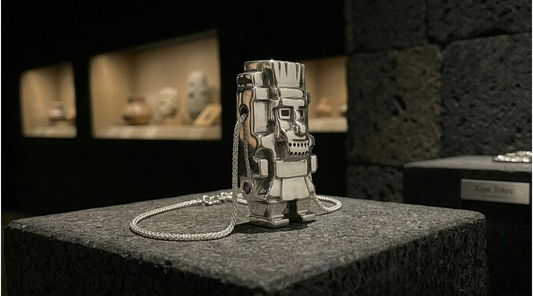
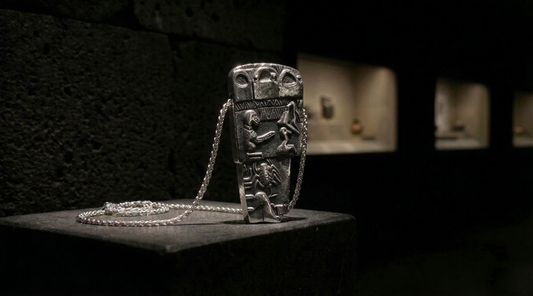
The Tlaloc Monolith Pendant
Regular price From €555,00 EURRegular priceUnit price per -
The Göbekli Tepe Pillar 43 Pendant
Regular price From €555,00 EURRegular priceUnit price per -
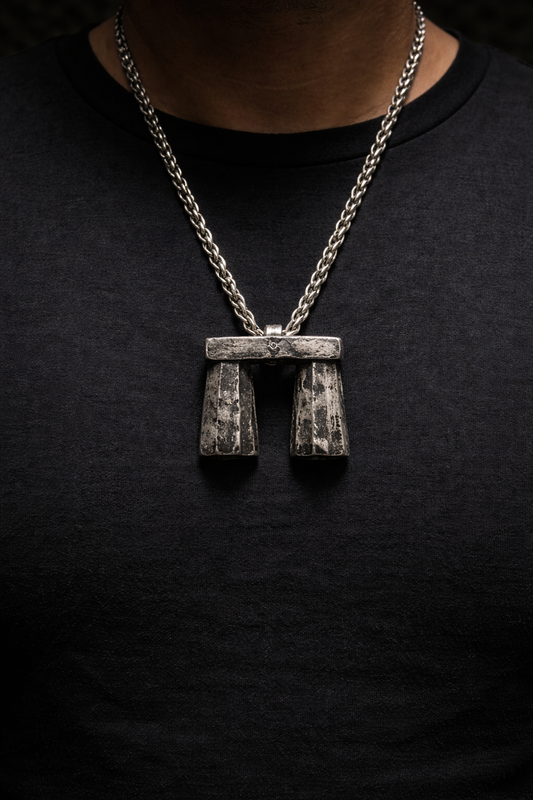
The Stonehenge Trilithon Pendant
Regular price From €555,00 EURRegular priceUnit price per -
The Eroded Sphinx Pendant
Regular price From €333,00 EURRegular priceUnit price per -
The Great Sphinx Pendant
Regular price From €333,00 EURRegular priceUnit price per -
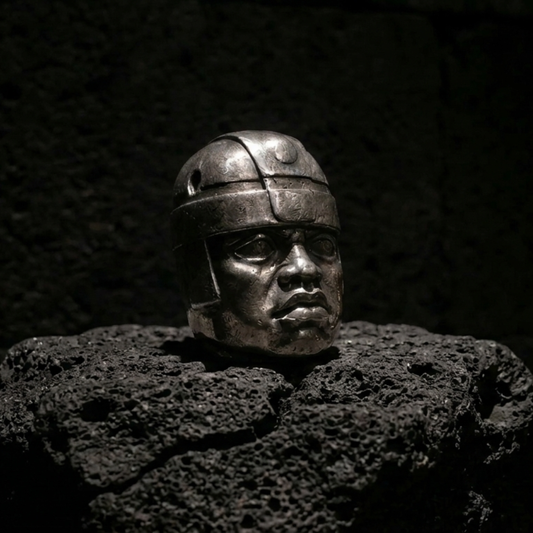
The Giant Olmec Head Pendant
Regular price From €777,00 EURRegular priceUnit price per -
The Pregnant Woman Pendant
Regular price €420,00 EURRegular priceUnit price per -
The Moai Head Pendant
Regular price From €333,00 EURRegular priceUnit price per







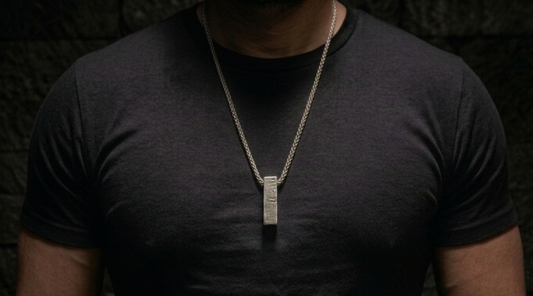

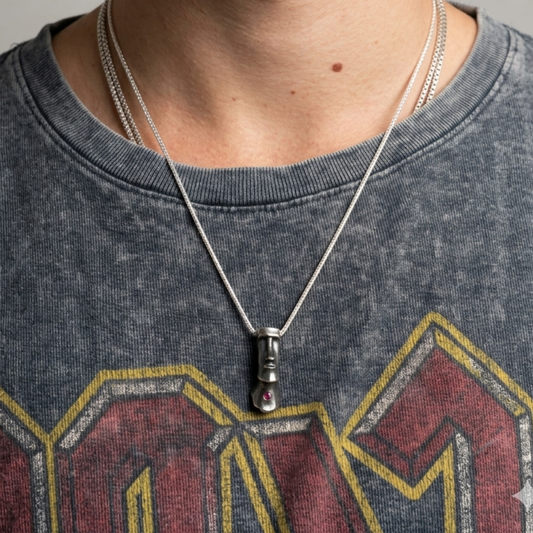
Silver Chains
-
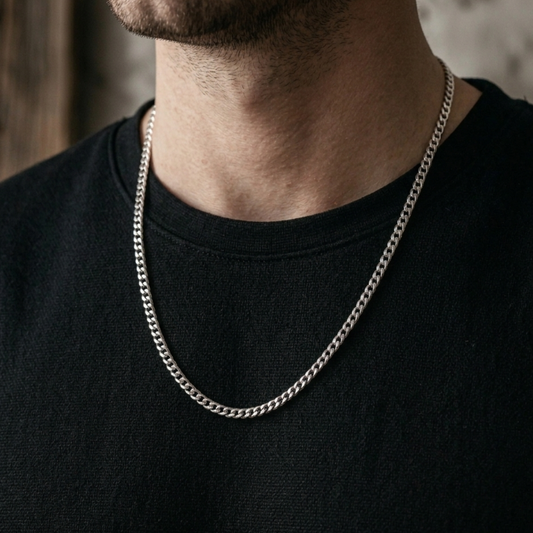
Cuban Chain Silver Necklace .925
Regular price From €99,00 EURRegular priceUnit price per€90,00 EURSale price From €99,00 EUR -
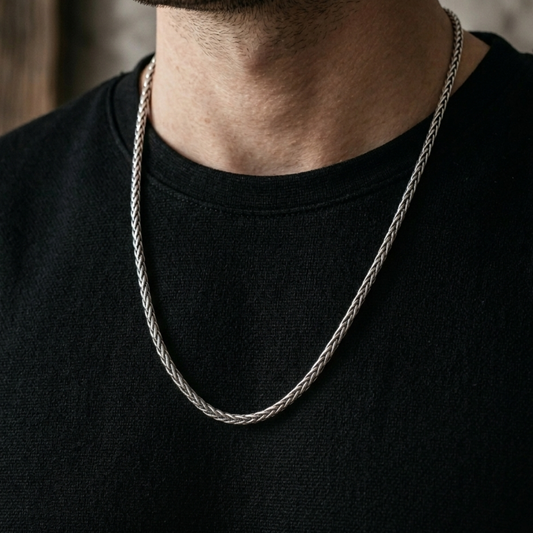
Spiga Chain Silver Necklace .925
Regular price From €169,00 EURRegular priceUnit price per€90,00 EURSale price From €169,00 EUR -
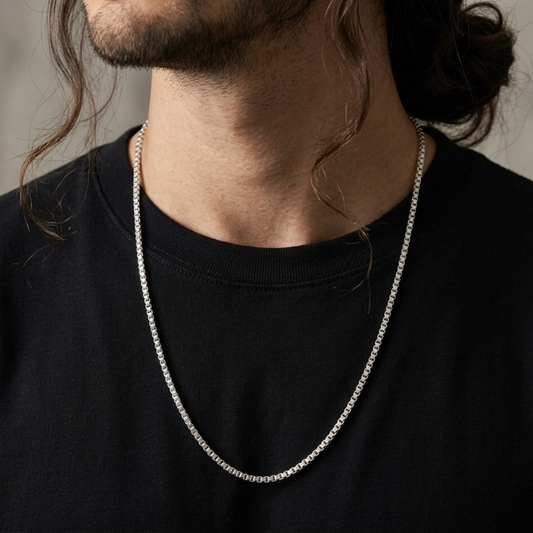
Box Chain Silver Necklace .925
Regular price From €119,00 EURRegular priceUnit price per€90,00 EURSale price From €119,00 EUR