Göbekli Tepe, Şanlıurfa, Türkiye. 37.2231° N, 38.9226° E
The Göbekli Tepe Pillar 43 Pendant


€555,00
Human Life is an Ancient Cycle
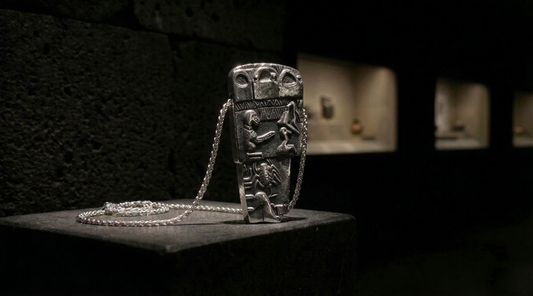
The Göbekli Tepe Pillar 43 Pendant represents primitive civilization and deep time, celestial order, ritual memory, and the ancient human need to visualize time and symbolize the sky. Its symbols; a bird holding a sphere, a scorpio and three baskets suggest harvest and return, timing and continuity.
As a pendant, it becomes a symbol of natural order, perspective, and human continuity. It speaks to the part of us that still lives by seasons, calendars, gatherings, losses, and returns. The form reminds the wearer that modern life is only the newest layer over something much older: the same human impulse to look upward, mark time, survive the dark, and celebrate the next beginning.
As a pendant, it becomes a symbol of natural order, perspective, and human continuity. It speaks to the part of us that still lives by seasons, calendars, gatherings, losses, and returns. The form reminds the wearer that modern life is only the newest layer over something much older: the same human impulse to look upward, mark time, survive the dark, and celebrate the next beginning.
Handcast in Mexico City · Ships worldwide
Specifications
Title
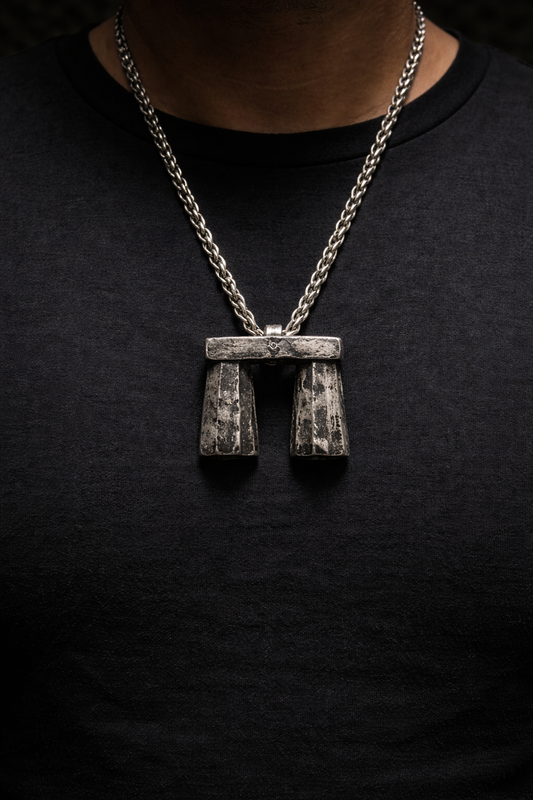
The Stonehenge Trilithon Pendant
Material
Sterling Silver .925
Finish
Silver
Stones
Red Ruby 2 mm
Weight
35 g
Dimensions (HxWxD)
2x3x1 cm
Origin
Göbekli Tepe, Şanlıurfa, Türkiye. 37.2231° N, 38.9226° E
✦
Any text, any piece. Precision-cut into solid metal — coordinates, initials, a date, a message. No matter how small, we'll get it there.
Enquire about engraving →
The record
A sign from before history.
At Göbekli Tepe, the usual story of civilization begins to crack. Long before Sumer, long before Egypt, long before writing, cities, or official history, people were already cutting stone, raising monuments, carving symbols, gathering in ritual spaces, watching the sky, honoring the dead, and organizing life around forces larger than themselves.
Pillar 43 — often called the Vulture Stone — is one of the most arresting surviving images from that world. Its surface is crowded with forms that feel deliberate rather than decorative: a great bird holding a round disk surrounded by other birds, a scorpion, snakes, abstract bands, and three basket-like signs above. Mainstream archaeology can describe the carvings, the site, the tools, the animal remains, the ritual context, and the extreme age of the place. But it cannot fully tell us what the panel meant to the people who made it.
Some researchers have read Pillar 43 as a possible memory of catastrophe around the Younger Dryas — a symbol-system connected to the sky, time, and a reset in the human story. Others focus on death ritual, ancestor practice, animal symbolism, and the strange funerary atmosphere of the site.
Around Göbekli Tepe there is also evidence of grain processing, communal gathering, and possibly fermented drink, giving the place a more human charge: not only death and fear, but harvest, survival, intoxication, ceremony, and return.
That is where this piece lives.
Not in a museum label, and not in a single neat explanation, but in the older truth underneath: humans have always watched the sky. We have always lived by calendars. We have always buried our dead, marked the seasons, feared the end, and gathered to celebrate being alive for another harvest.
This pendant is cast from an original sculptural interpretation of Pillar 43 and finished by hand in Mexico City. The rough silver surface echoes carved limestone, shadowed relief, and the feeling of a message carried forward from a lost age. It is not a replica. It is a condensed monolith — a reminder that there is always someone older, and that we have been human for a very long time.
Pillar 43 — often called the Vulture Stone — is one of the most arresting surviving images from that world. Its surface is crowded with forms that feel deliberate rather than decorative: a great bird holding a round disk surrounded by other birds, a scorpion, snakes, abstract bands, and three basket-like signs above. Mainstream archaeology can describe the carvings, the site, the tools, the animal remains, the ritual context, and the extreme age of the place. But it cannot fully tell us what the panel meant to the people who made it.
Some researchers have read Pillar 43 as a possible memory of catastrophe around the Younger Dryas — a symbol-system connected to the sky, time, and a reset in the human story. Others focus on death ritual, ancestor practice, animal symbolism, and the strange funerary atmosphere of the site.
Around Göbekli Tepe there is also evidence of grain processing, communal gathering, and possibly fermented drink, giving the place a more human charge: not only death and fear, but harvest, survival, intoxication, ceremony, and return.
That is where this piece lives.
Not in a museum label, and not in a single neat explanation, but in the older truth underneath: humans have always watched the sky. We have always lived by calendars. We have always buried our dead, marked the seasons, feared the end, and gathered to celebrate being alive for another harvest.
This pendant is cast from an original sculptural interpretation of Pillar 43 and finished by hand in Mexico City. The rough silver surface echoes carved limestone, shadowed relief, and the feeling of a message carried forward from a lost age. It is not a replica. It is a condensed monolith — a reminder that there is always someone older, and that we have been human for a very long time.
Craft
Cast and hand-finished in Mexico City. 3D modelled from archaeological reference, printed, moulded, cast in wax, perfected by hand, then cast in solid precious metal. No two pieces are identical.
-
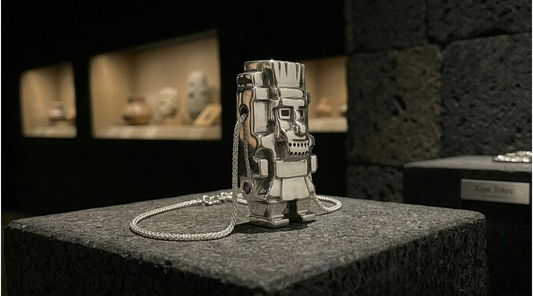
The Tlaloc Monolith Pendant
Regular price From €555,00 EURRegular priceUnit price per -
The Göbekli Tepe Pillar 43 Pendant
Regular price From €555,00 EURRegular priceUnit price per -
The Stonehenge Trilithon Pendant
Regular price From €555,00 EURRegular priceUnit price per -
The Eroded Sphinx Pendant
Regular price From €333,00 EURRegular priceUnit price per -
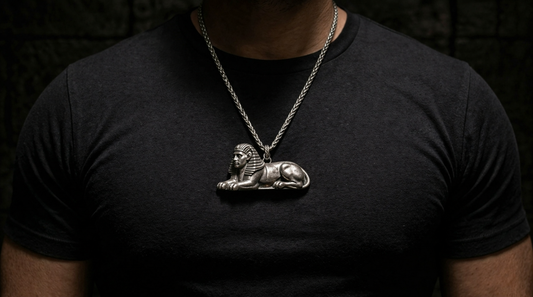
The Great Sphinx Pendant
Regular price From €333,00 EURRegular priceUnit price per -
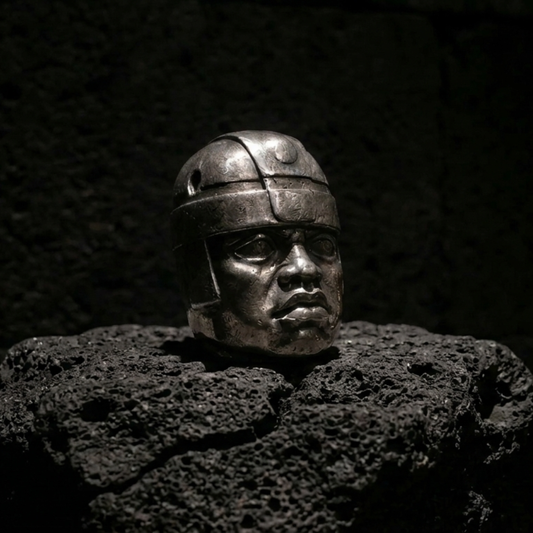
The Giant Olmec Head Pendant
Regular price From €777,00 EURRegular priceUnit price per -
The Pregnant Woman Pendant
Regular price €420,00 EURRegular priceUnit price per -
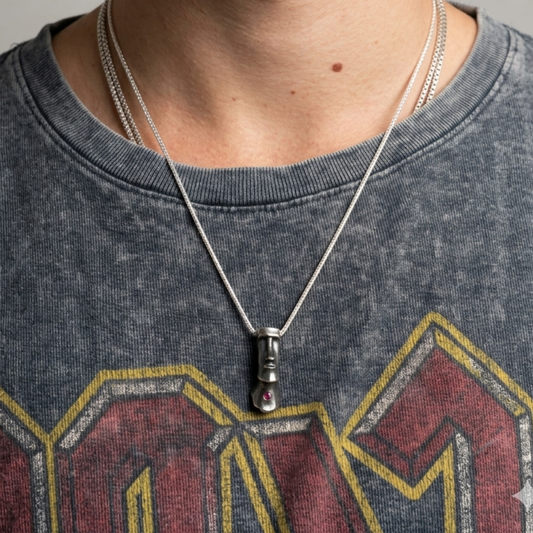
The Moai Head Pendant
Regular price From €333,00 EURRegular priceUnit price per








Silver Chains
-
Cuban Chain Silver Necklace .925
Regular price From €99,00 EURRegular priceUnit price per€90,00 EURSale price From €99,00 EUR -
Spiga Chain Silver Necklace .925
Regular price From €169,00 EURRegular priceUnit price per€90,00 EURSale price From €169,00 EUR -
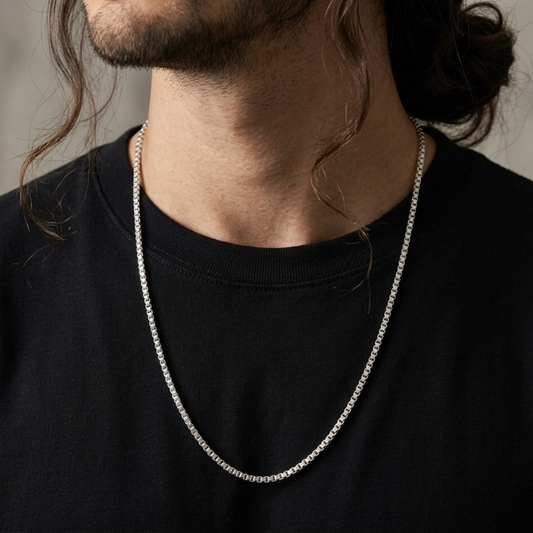
Box Chain Silver Necklace .925
Regular price From €119,00 EURRegular priceUnit price per€90,00 EURSale price From €119,00 EUR